Coverage & Barrier Materials
Discuss the surfaces to be covered and the barrier material suited to the planned work. Existing ground conditions and access affect preparation and placement.


A better moisture plan starts beneath your home. Explore vapor barrier installation, crawlspace conditions and related drainage needs with a licensed local contractor.
The installation scope should reflect the conditions beneath your property.
Crawlspace encapsulation uses a planned barrier assembly to separate exposed ground and selected surfaces from the crawlspace environment. Coverage, seams, edges and transitions should be considered as part of the installation scope.
A ground vapor barrier helps manage moisture coming from the soil. It does not automatically address standing water, plumbing leaks or every source of humidity. Those conditions need to be reviewed before deciding on the work.
Drainage & Moisture Control Inc. provides crawlspace encapsulation and related moisture control services in San Francisco and our Bay Area service locations. We discuss access, current conditions and any drainage components that may need to be coordinated with the barrier.
The barrier is one part of the plan. Ask how coverage, water management and access fit together beneath your home.
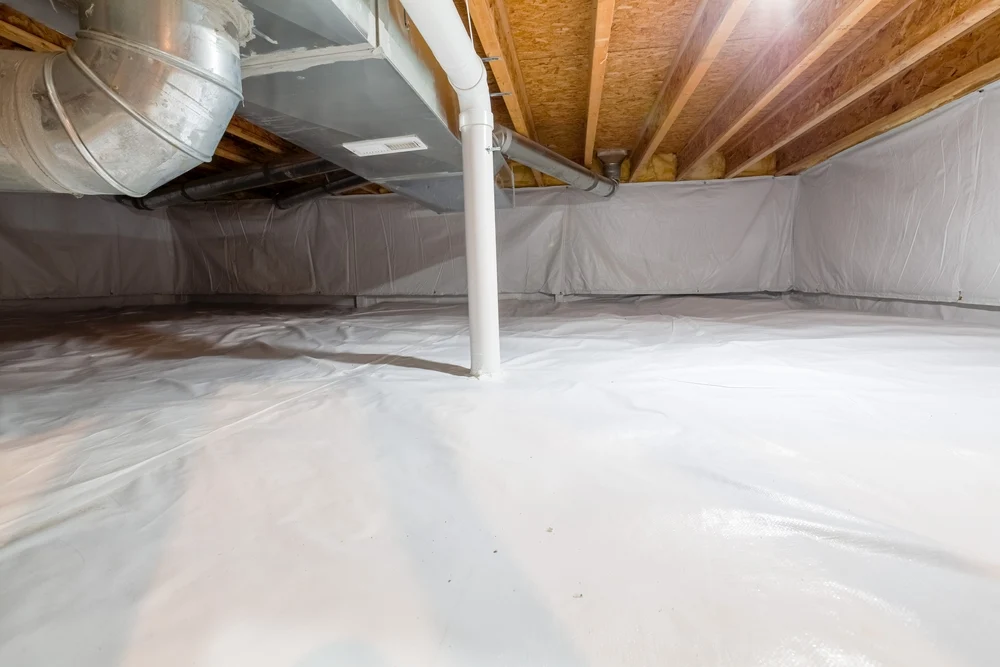
Encapsulation should follow the property’s conditions and the agreed work scope, rather than a standard blanket applied without review.
Discuss the surfaces to be covered and the barrier material suited to the planned work. Existing ground conditions and access affect preparation and placement.
Review how the assembly addresses seams, perimeter edges, supports and service penetrations. These details influence how the barrier works as a connected system.
Standing water, seepage and other moisture sources should be considered separately from ground vapor. Drainage or other measures may be needed alongside the barrier.
Start with what is already happening beneath the home. The estimate should distinguish barrier installation from drainage, repairs or other work.
Identify where it collects and when it appears. Ground covering should not be used as a substitute for reviewing active water problems.
Describe exposed areas, displaced covering or visible damage. Any reuse or replacement scope should be discussed explicitly.
Review the entry area, supports, piping and equipment so the installation plan accounts for the available space.
Damaged building materials, leaks or other concerns may need additional assessment and work beyond encapsulation.
These observations help explain the concern. They do not establish a cause or confirm that encapsulation is the only work needed.
Describe recurring odors or dampness beneath the home and when you notice them.
Share where the ground remains wet or where existing covering is missing or damaged.
Tell us how water enters or collects so drainage needs can be reviewed.
Mention earlier repairs, existing equipment or recent work that may affect access or moisture conditions.
Discuss the existing ground covering, moisture concerns, access and affected areas.
Review whether drainage or other moisture-related work needs to accompany the barrier installation.
Define the included surfaces, preparation, seams and transitions, along with any separate work.
Discuss inspection access and how to care for the installed materials and connected components.
See original company project photographs and installation details.
Explore our project portfolio ↗We discuss crawlspace encapsulation for properties in San Francisco, Marin County, Berkeley, Sonoma County, San Mateo County and Petaluma. Share your address to review availability and the conditions beneath your home.
Crawlspace height, access, supports and existing services vary by property. Your proposed scope should account for those details.
Ask About Your LocationClarify what encapsulation addresses and which related conditions require separate attention.
Discuss My CrawlspaceIt is a planned barrier installation intended to manage ground moisture and selected crawlspace surfaces. The scope should explain coverage, seams, edges and other transitions for the actual property.
A ground vapor barrier and a water collection system serve different roles. Standing water, seepage or plumbing leaks need to be assessed separately and may require drainage or other work.
Coverage depends on the proposed assembly and crawlspace conditions. Ask which surfaces are included and how edges, supports and service penetrations will be handled.
Some properties need collection or pumping, while others do not. The source and route of water should be reviewed before assuming a pump is necessary.
Barrier installation is not a substitute for every repair or separate treatment. Point out damaged materials or other concerns so the appropriate assessment and scope can be discussed.
The suitability of additional measures depends on the home and crawlspace conditions. Ask what is recommended, what is included and what needs separate work. Do not assume every system includes the same equipment.
Access, crawlspace size, existing conditions, preparation, barrier material and coverage can affect the scope. Related drainage, repairs or equipment may also change the estimate.
Call (415) 226-5888 or (650) 609-0030, or email drainagemoisturecontrol@gmail.com. The Home estimate form can accept requests once Formspree is connected.
Tell us what you have noticed and what needs attention.