
Water That Lingers
Mark the low areas and note how long the yard stays wet. Explain whether the concern begins beside paving, near a downspout or in open ground.

Water that stays in the yard. Damp ground beneath the home. Start with the source and discuss a drainage route planned for your Petaluma property.


The way a property dries after rain tells part of its drainage story. Note where water first appears, how long it remains and whether the same area becomes wet each time. Those observations are more useful than choosing a drain from a symptom alone.
Drainage & Moisture Control Inc. provides French drain and moisture control services in Petaluma. We discuss the affected areas, existing drains and the possible collection and discharge routes around the home.
Ground conditions vary by lot. Where soil drains slowly, water may remain near the surface; elsewhere, runoff or an existing outlet may explain the concern. The proposed work should respond to the actual property rather than assume every Petaluma home has the same soil.
Water beneath a Petaluma home should be reviewed alongside conditions outside it. A roof outlet, side-yard low point or existing collection line may affect what happens beneath the building. Share the full pattern rather than only the wettest photograph.
A vapor barrier addresses moisture transmission from the ground. Standing water needs separate assessment and may require collection or pumping. Encapsulation and drainage can be discussed together while keeping the purpose of each component clear.
For wider Sonoma County coverage, visit our county service page. This Petaluma page focuses on your local property concerns; contact us with your address to discuss access, availability and the proposed work.
Discuss My PropertyMark the low areas and note how long the yard stays wet. Explain whether the concern begins beside paving, near a downspout or in open ground.
Share whether you see standing water, damp soil or an existing barrier. Ground vapor and collected water can need different parts of the scope.
Tell us when the existing system was installed and where its outlet is, if known. Review its route and condition before deciding what should be added.
Note where water appears and when it clears.
Send photos, your address and known drainage details.
Review the collection route, outlet and scope.
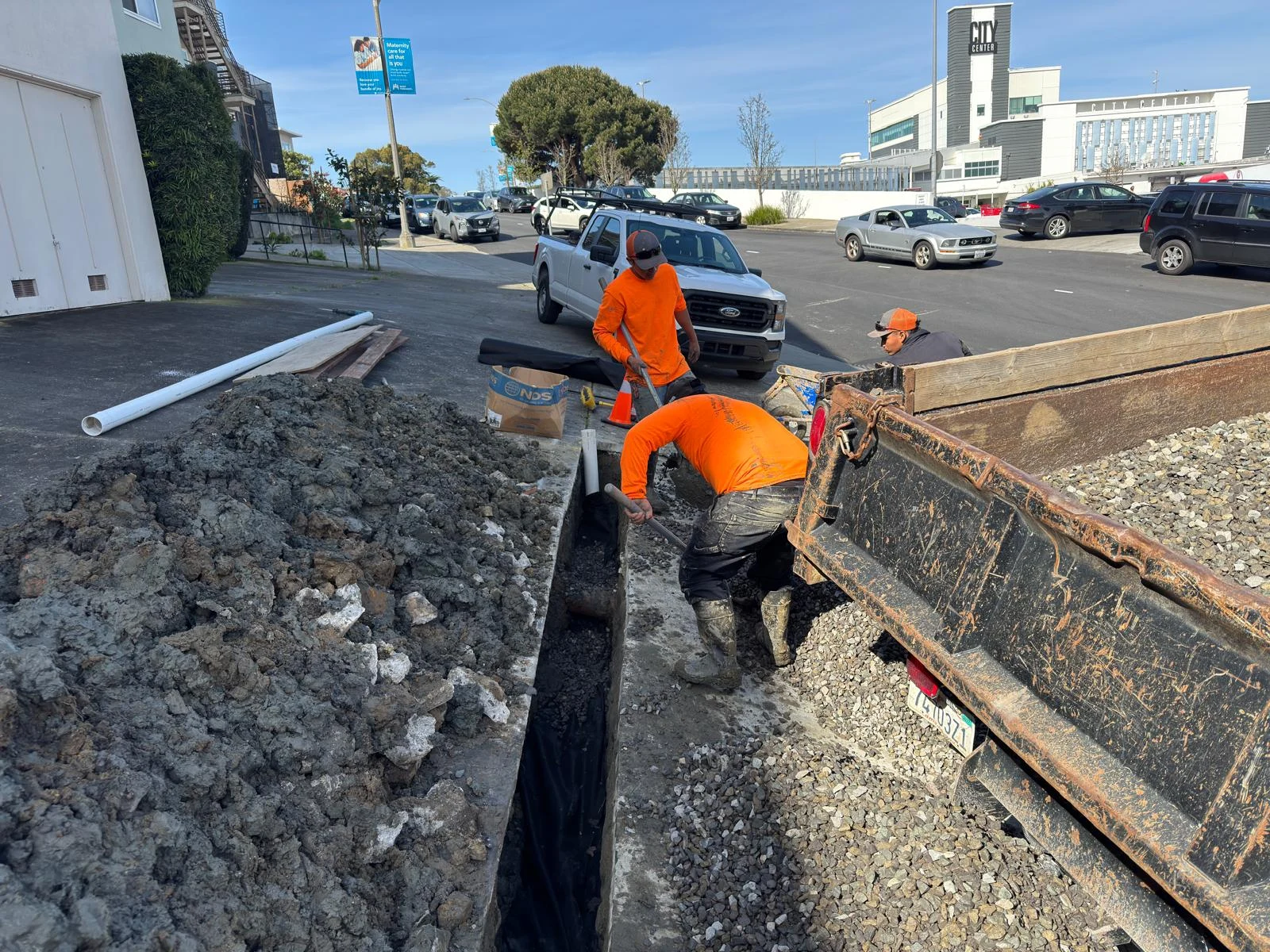
Collect below-ground water with a planned trench, perforated piping and drainage materials.
Explore service ↗Discuss a basin and pumping where the available water route cannot rely on gravity alone.
Explore service ↗Coordinate underground collection around the affected area and the intended water route.
Explore service ↗Carry collected water between system components and the planned discharge destination.
Explore service ↗Review moisture entry and how waterproofing and drainage fit the below-grade space.
Explore service ↗Discuss ground vapor, barrier coverage and any separate standing water concerns.
Explore service ↗An estimate should help you understand where water will be collected, how it will be carried and the proposed destination. Ask which affected areas are included and whether existing features will remain part of the system.
Discuss excavation access, the materials proposed and any related work around the building. Photos and previous drainage plans can help explain the current layout, but the actual site conditions should guide the recommendation.
Keep a record of earlier repairs and the changes you notice during rainfall. These details make it easier to discuss whether the concern is new, recurring or connected to work already in place.
Explore Sonoma CountyDiscuss the source, access and available outlet before selecting components.
Request a Free EstimatePetaluma is part of our established service coverage. Contact us with your address and water concerns to discuss installation requirements and availability.
Possible contributors include a low area, runoff entering the site, slow drainage or an existing drain that needs review. The timing and location help explain what should be assessed.
A French drain uses perforated piping and drainage materials to collect below-ground water. A solid line transports water between collection components and a planned destination.
A barrier addresses ground vapor. Standing water should be reviewed separately and may require collection or pumping alongside encapsulation work.
Share its age, route, outlet and earlier repair information if available. Those details help frame whether the existing system can be part of the proposed work.
Call (415) 226-5888 or (650) 609-0030, or email drainagemoisturecontrol@gmail.com. Include your address, photos and a brief description of the issue.
Share your address, photographs and the areas where water appears.