01
Collection Location
Identify where water can enter the system. The placement should connect with the observed source and affected area.


A clearer route for unwanted water. Explore underground drainage that connects the collection area with the right piping and a planned discharge point.
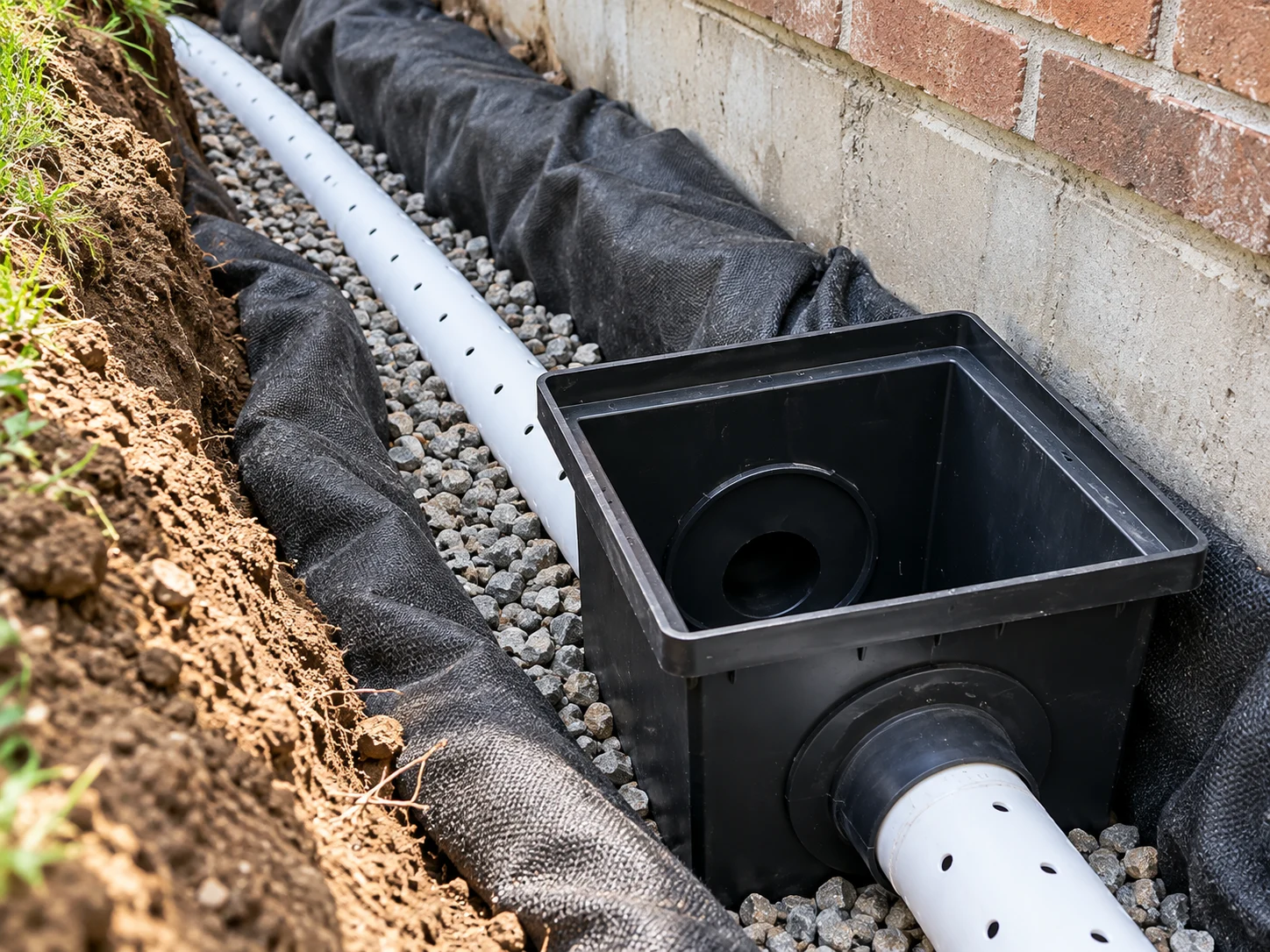
Subsurface drainage places parts of the water management system below ground. Depending on the problem, the plan can include collection inlets, perforated drain sections, solid transport lines and a suitable outlet.
The important distinction is where water enters. A surface inlet receives runoff at a defined point. A perforated collection section receives water along a below-ground route. Solid piping carries collected water between the connected parts.
Drainage & Moisture Control Inc. discusses subsurface drain installation for properties across San Francisco and our Bay Area service locations. We review the water concerns, site access and discharge options before defining the work.
Collection points, underground routes and discharge need to work as a connected plan.
Identify where water can enter the system. The placement should connect with the observed source and affected area.
Discuss the pipe type and connections at each part of the route. Collection and transport components serve different roles.
Review the planned outlet, available access and the surface work included in the proposed installation.
Good planning connects the visible concern with the work below the surface. Review the proposed layout before choosing the installation approach.
Describe where water appears, how long it remains and what changes during rain.
Consider collection areas, slopes, existing surfaces, access and underground services.
Define the proposed collection components, pipe route and suitable discharge point.
Discuss excavation, materials, connections and any finish work included in the estimate.
Discuss operation, relevant upkeep and access to the installed components.
Share where water collects and whether it remains after surrounding areas have drained.
Saturated areas may need review of groundwater, surface flow or both.
Describe where water reaches foundation-adjacent or below-grade areas.
Tell us about earlier drainage work, visible connections and any changes around the property.
Want to see original photos from the company’s work?
Explore our project portfolio ↗We discuss drainage installation for properties in San Francisco, Marin County, Berkeley, Sonoma County, San Mateo County and Petaluma. Share your address and water concerns to review availability.
The route should fit the actual property. Existing features, access and outlet options can vary even between neighboring sites.
Discuss the role of each component before choosing the installation work.
Discuss My ProjectNo. Underground systems can use different components. Perforated sections collect water along a route, while solid piping transports water collected at other points. The layout should match the source and movement of water.
An inlet receives runoff at a defined point and can feed buried transport piping. It collects water at the surface rather than collecting groundwater along the pipe.
A French drain is a below-ground collection approach using perforated pipe and drainage materials. A wider subsurface drainage plan may also include inlets, solid transport lines or pumping where needed.
It may help depending on the source of the water, grading and available outlet. Persistent pooling can involve surface runoff, underground moisture or multiple conditions, so the collection approach should follow an assessment.
The destination needs to be appropriate for the property and applicable requirements. Review the outlet before agreeing on the collection and pipe route.
The length and access of the route, excavation, existing surfaces, materials, connections and discharge work can affect the scope. Ask what finish or related work is included.
The system images on this page are illustrations used to explain drainage components. Visit our project portfolio for original photographs supplied by the company.
Call (415) 226-5888 or (650) 609-0030, or email drainagemoisturecontrol@gmail.com. The Home estimate form can accept requests once Formspree is connected.
Tell us where the water collects and what happens after rain.